
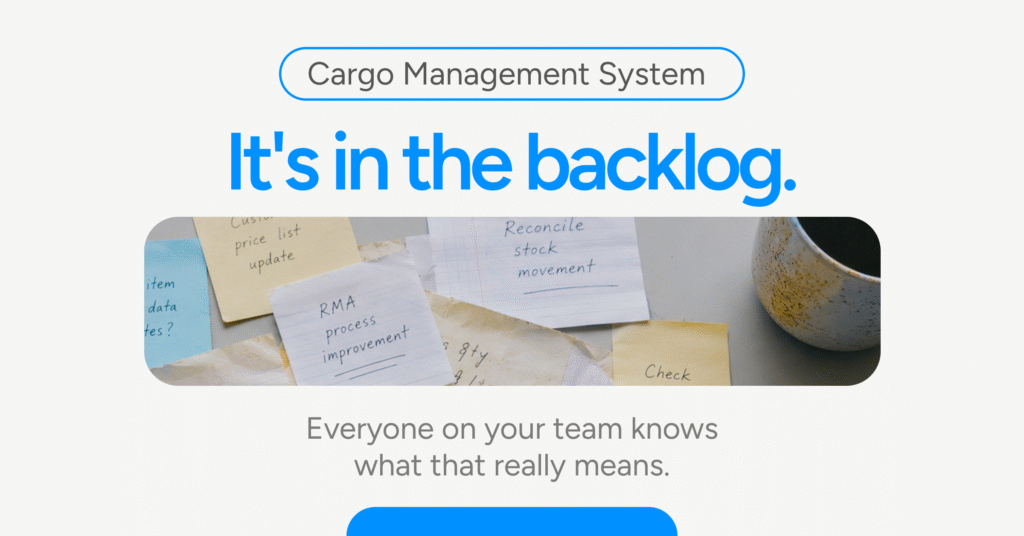
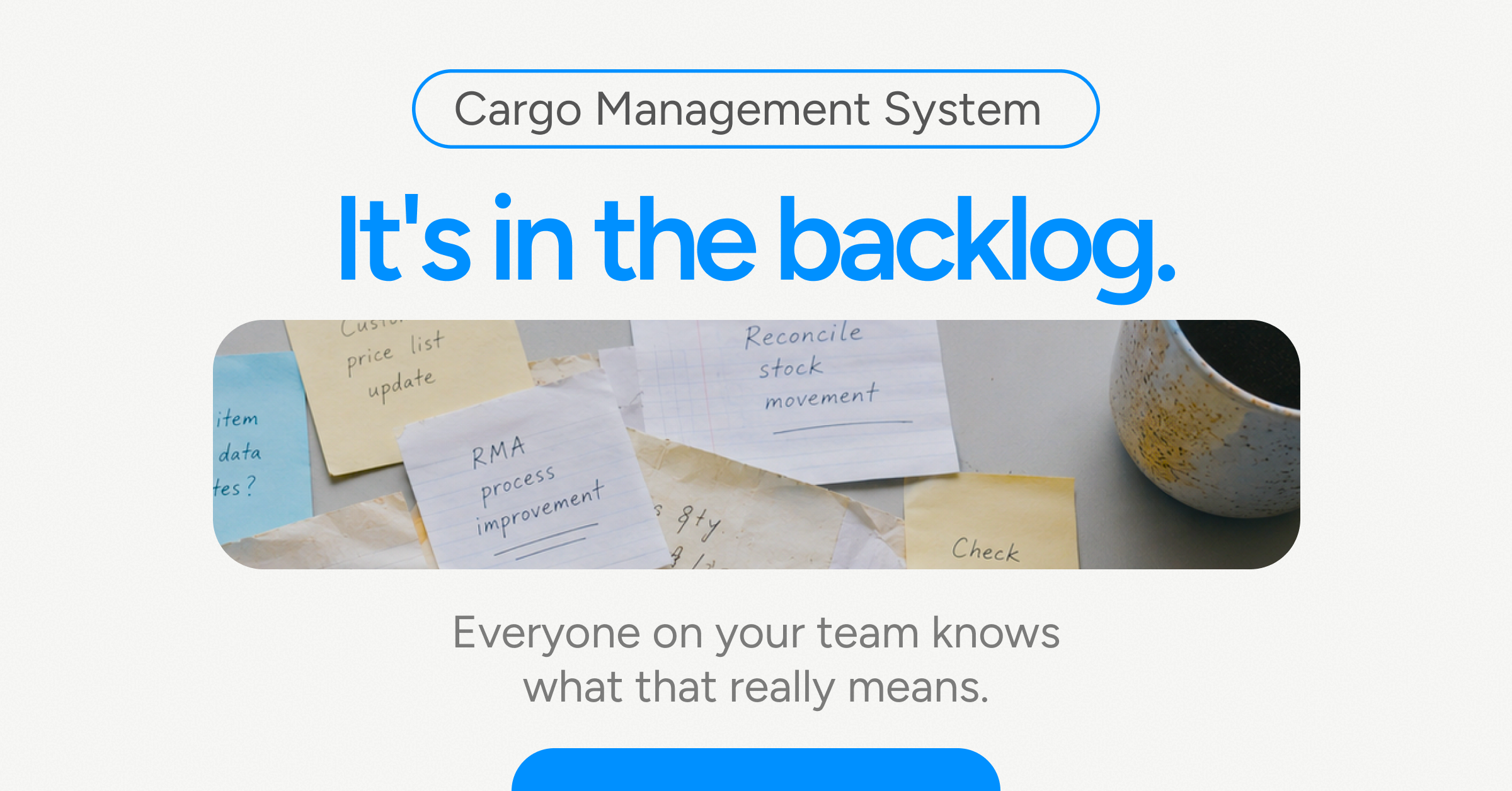
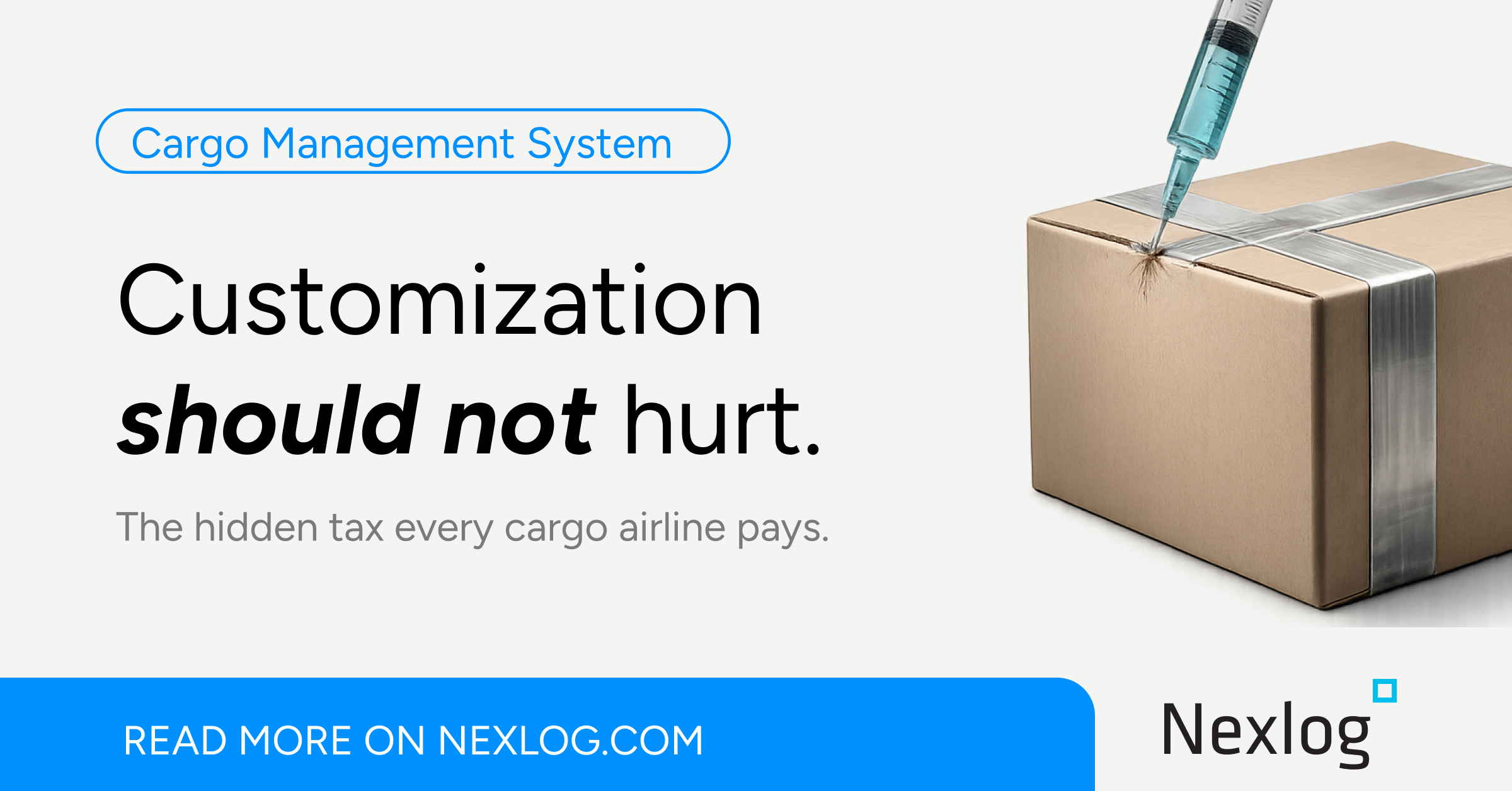
Open any cargo IT backlog and the pattern is familiar.
Pricing updates. Surcharge adjustments. Handling rule changes. Route configurations. Things the business needed weeks ago, still waiting.
That is not a team failure. It is a predictable output of how most legacy cargo platforms were built.
The core problem
Traditional cargo platforms were designed for stability. Long implementation cycles. Infrequent changes. A world where the business and the system moved at the same pace.
That world no longer exists.
Air cargo operations today move fast. New products, new routes, new regulatory requirements, new customer demands. The business needs to adjust pricing and operational parameters frequently. Legacy platforms were not built for that rhythm.
Every change, regardless of complexity, goes through the same process. Requirements. Development. Testing. Release window. The queue fills up. Simple requests sit alongside complex ones. The backlog grows.
What this costs
Every week a pricing update does not reflect a commercial decision is a week of manual workarounds. Every delayed configuration is a week of the business operating outside the system.
The cost is real. It rarely appears on a single invoice. It accumulates across dozens of small delays, each one invisible on its own.
How Nexlog approaches this
We built Nexlog with one operational reality in mind: cargo businesses change constantly, and the platform needs to keep up.
Changes that are simple for the business should be simple in the system. That principle shaped every architectural decision we made.
Gollog, the cargo operation of Gol Linhas Aéreas and the largest air cargo operator in Latin America, implemented Nexlog in six months across a full, complex operation. Smaller carriers structured their operations from scratch in weeks.
In both cases, the teams reported that changes which previously required long cycles were handled at the pace the business actually needed.
A common objection
“We manage our backlog. It is under control.”
Managing a backlog is not the same as having a system that does not create unnecessary backlog in the first place. The goal is not faster queue management. It is fewer things that should never have entered the queue.
A simple check
Look at your last ten backlog items. Ask honestly: how many of these are genuinely complex engineering problems, and how many are business changes that got stuck in a development process?
If most are the second type, the platform is working against the business. That is worth examining.











 English
  Portuguese
  French
  Spanish